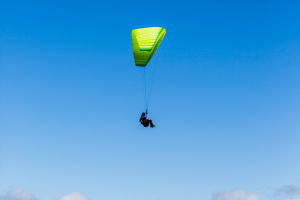
Have you ever dreamed of flying but felt that big expeditions or extreme adventures were too much time, effort, or commitment? We’re about to discover paragliding micro-adventures—a way to experience the thrill of flight in short, manageable trips.
Even a few hours can give us the sensation of soaring above valleys, hills, and rivers, and create memories that last a lifetime. These mini-adventures prove that flying doesn’t have to be limited to vacations or extreme sports—it can fit into our everyday lives if we’re willing to step outside.
What Makes It a Micro-Adventure?
Micro-adventures are compact, local, and easy to plan. We don’t need a week off work or expensive travel; a nearby hill, slope, or open field is enough. We can carry just the essentials—wing, harness, and backup parachute—and still enjoy the full feeling of gliding in the sky. The idea is simple: pack maximum thrill into a short timeframe. Even a morning or afternoon flight can feel like a complete escape from routine, giving us a fresh perspective and a rush of adrenaline.
Essential Gear for Short Flights
Our gear is minimal but crucial. The main wing is lightweight, UV-resistant, and made of durable fabric with strong, non-stretch lines for precision. The harness keeps us comfortable and safely attached, with suspension points affecting stability or responsiveness. A backup parachute is essential for safety, and optional tools like radios or GPS devices help navigate or communicate. With this compact setup, we’re ready to transform a regular weekend into an aerial adventure.
Launching Made Simple
Takeoff is exciting yet accessible. We face the wind, inflate the wing, and take a few running steps until the lift carries us off the ground. Even short flights deliver an incredible rush of freedom—the moment we leave solid ground behind is unforgettable. For micro-adventures, smaller hills or slopes are enough, making it possible to enjoy the thrill without traveling far or committing a whole day.
Steering and Enjoying the View
Once airborne, we use brake lines and subtle weight shifts to turn, glide, and explore the landscape. Unlike long expeditions, micro-adventures let us focus more on the view—the rivers below, forests stretching to the horizon, or nearby towns from above. Every gentle curve of the wing is a chance to connect with the scenery. We notice details that are often missed on the ground: a sunlit treetop, a winding trail, or clouds drifting past our wing. It’s a mix of excitement, relaxation, and mindfulness all at once.
Climbing Without Power
Even in short flights, we can gain surprising altitude. Thermals—rising pockets of warm air—allow us to climb hundreds or even thousands of meters above our launch point. Strong winds near mountains or cliffs create lift along slopes. We simply navigate into these currents, enjoying effortless ascent and a sensation of floating. Because micro-adventures rely on natural forces, they teach patience, attention, and skill—each flight is a lesson in reading the sky and moving with it.
Controlled Descents
Descending is just as engaging as climbing. Typical rates are 1–1.5 meters per second, but techniques like “Big Ears” reduce wing area for a faster drop, while “B Stall” allows controlled sinking at 5–7 meters per second. Spiral dives are for advanced flyers and require skill, but even brief micro-adventures can teach us the joy of landing smoothly. The final approach, slowing near the ground and braking to a gentle stop, completes the experience, leaving us with a sense of accomplishment and peace.
Why Micro-Adventures Matter?
We often underestimate the power of small escapes. Paragliding micro-adventures show us that flying isn’t about extremes—it’s about feeling alive, free, and connected, even for a few hours. They remind us that adventure can exist in our everyday lives if we step outside our routines. Short flights build confidence, teach awareness, and provide a fresh perspective. Even a single glide can shift how we see the world, reminding us of the simple thrill of movement and wind.
Tips for First-Timers
For those new to paragliding, micro-adventures are perfect. Start with a basic course, learn the controls, and practice takeoffs and landings on smaller slopes. Always check weather conditions—wind speed and direction are key for safe flights. Bring light snacks, water, and a camera if you want to capture the view. Most importantly, stay relaxed and enjoy the moment: the sky is open, and the adventure is yours.
Soar Beyond Limits
Paragliding micro-adventures remind us that the sky is a playground, not a boundary. Lykkers, even a quick morning lift-off can fill us with excitement, and an afternoon glide can reveal new perspectives and create unforgettable memories. Next time we feel the need to break routine, let’s step into our harness, let the wind carry us, and discover how even a short flight can turn an ordinary day into something extraordinary.