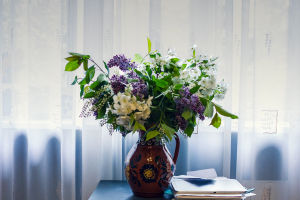
You've probably brought flowers home before, set them on the nearest table, and thought, “They'll do for now.” A day later, they're still there, but the magic feels gone.
The truth is, flowers don't lose their charm that fast—poor placement does. A home bouquet can quietly change the mood of a room when it's placed with care, not perfection.
Choose the Right Spot Before the Vase
Where you place a bouquet matters more than the flowers themselves.
1. Look for natural pauses
Bouquets work best where your eyes naturally rest, like entry tables or dining corners.
2. Avoid busy zones
Crowded shelves or workspaces distract from the flowers.
3. Actionable example
Place a bouquet near your front door but slightly off-center. This creates Gentle welcome, Visual balance, Instant warmth without blocking movement.
Let the flowers greet people, not compete with clutter.
Match Bouquet Size to Furniture Scale
A common mistake is using the wrong size arrangement for the surface.
Large table, fuller bouquet
Wide surfaces need volume to avoid looking empty.
Small table, lighter touch
Overly tall bouquets overwhelm compact spaces.
Actionable rule
The bouquet height should be no more than one and a half times the height of the surface it sits on. This keeps everything visually calm and proportioned.
Balance keeps flowers feeling intentional.
Use Odd Numbers for a Natural Look
Symmetry can feel stiff in a home setting.
Odd numbers feel relaxed
Three or five stems often look more natural than four.
Variation adds life
Different stem heights create movement.
Actionable styling tip
Trim stems to three slightly different lengths before placing them in the vase. This creates Soft flow, Natural rhythm, Effortless charm without extra effort.
Nature rarely lines things up perfectly.
Let Light Do Part of the Work
Flowers react beautifully to light, and placement should take advantage of it.
Indirect light is best
Strong sunlight can fade petals quickly.
Gentle shadows add depth
Soft lighting enhances color and texture.
Actionable placement idea
Place bouquets near a window with sheer curtains. The filtered light highlights petals while keeping them fresh longer.
Good light makes flowers feel alive.
Keep the Background Simple
A bouquet needs contrast to stand out.
Neutral backgrounds help
Plain walls or solid furniture surfaces work best.
Avoid patterned backdrops
Busy designs compete for attention.
Actionable setup
If your wall is bold, place the bouquet against a wooden cabinet or neutral sideboard instead. This creates Clear focus, Stronger colors, Cleaner lines.
Flowers shine when the background steps back.
Adjust Height for Eye-Level Comfort
Bouquets shouldn't block conversation or views.
Dining areas need lower arrangements
You should see people across the table.
Corners allow taller designs
Vertical space works better there.
Actionable adjustment
For dining tables, trim stems so the bouquet sits below eye level when seated. This keeps the table open and inviting.
Comfort always beats drama at home.
Rotate Placement to Extend Freshness
Bouquets don't need to stay in one spot forever.
Cooler rooms slow aging
Heat shortens flower life.
Nighttime moves help
Less light and warmth can refresh blooms.
Actionable habit
Move your bouquet to a cooler hallway or bedroom overnight. This supports Longer freshness, Brighter petals, Stronger stems with minimal effort.
Small changes make flowers last.
Use Everyday Objects as Style Anchors
Bouquets feel more grounded when paired thoughtfully.
Books add structure
They provide height and weight.
Trays create boundaries
They frame the arrangement visually.
Actionable styling trick
Place a small stack of books next to the vase on a console table. This creates Visual anchor, Layered depth, Styled ease without extra décor.
Flowers don't have to stand alone.
Refresh the Look With Small Changes
You don't need new flowers to refresh a bouquet.
Change the vase
A new shape shifts the mood instantly.
Remove aging stems
Less can look better.
Actionable refresh
After a few days, remove one-third of the stems and reposition the rest loosely. This gives the bouquet a second life and keeps it feeling intentional. Maintenance is part of styling.
A home bouquet doesn't need perfection or rules carved in stone. It just needs attention. When you slow down enough to notice light, scale, and placement, flowers stop being decoration and start becoming part of daily life. The next time you bring a bouquet home, don't rush it to the table. Give it a moment, and let the space guide you.