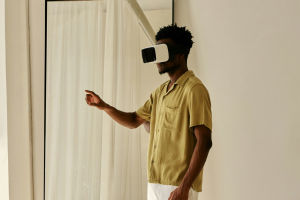
A typical morning may soon begin not with a phone screen, but with a fully immersive environment.
Instead of scrolling through updates, you might step into a virtual workspace, attend a meeting across continents, or explore a classroom built entirely from imagination.
Virtual reality (VR) is no longer limited to gaming—it is steadily positioning itself as a transformative layer over everyday life.
Redefining the Way We Work
Remote work has already changed how people collaborate, but VR has the potential to take it further. Rather than flat video calls, virtual offices allow individuals to interact in shared 3D spaces, creating a stronger sense of presence.
Key developments include:
1. Immersive Meetings – Participants can gather in virtual rooms, interact with digital objects, and communicate more naturally.
2. Global Collaboration – Teams across different locations can work together as if they are in the same physical space.
3. Enhanced Productivity – Customizable environments may reduce distractions and improve focus.
These changes could redefine workplace culture, making physical location far less relevant than it is today.
Transforming Education Through Immersion
Education is another field where VR shows significant promise. Traditional learning methods often rely on textbooks and static visuals, but VR introduces experiential learning.
Imagine studying history by walking through ancient cities or learning science by interacting with complex systems in real time. This shift offers several advantages:
• Improved engagement through interactive experiences
• Better retention by learning through direct involvement
• Access to environments that would otherwise be unreachable
Such immersive education could make learning more intuitive and accessible for a wide range of students.
Social Interaction in Virtual Spaces
Human connection is evolving alongside technology, and VR is beginning to reshape how people interact socially. Virtual environments allow individuals to meet, communicate, and share experiences beyond physical limitations.
1. Virtual Gatherings – Friends and families can meet in shared digital spaces regardless of distance.
2. Shared Experiences – Events, concerts, and activities can be attended together in immersive formats.
3. New Forms of Expression – Avatars and environments allow people to present themselves creatively.
While these interactions cannot fully replace real-world connections, they add a new dimension to communication.
Everyday Convenience and Applications
Beyond work and education, VR is gradually entering everyday routines. Its applications extend into areas that were once considered purely physical.
Examples include:
• Virtual shopping experiences where users can explore products in 3D
• Guided fitness sessions in interactive environments
• Simulated travel experiences that offer a sense of exploration from home
These uses demonstrate how VR can enhance convenience while expanding access to experiences.
Challenges That Still Remain
Despite its potential, VR faces several barriers before becoming a standard part of daily life.
1. Hardware Limitations – Devices can still be bulky and require improvement in comfort.
2. Cost Barriers – High-quality systems remain expensive for many users.
3. Content Availability – The ecosystem of applications is still developing.
4. User Adaptation – Not everyone is ready to integrate immersive technology into daily routines.
Addressing these challenges will be essential for widespread adoption.
The Balance Between Virtual and Real
As VR becomes more integrated into everyday life, a key question emerges: how much of our time should be spent in virtual environments? While the technology offers efficiency and creativity, maintaining a balance with real-world experiences remains important.
The future of VR is not about replacing reality but enhancing it. Its success will depend on how well it integrates into daily routines without overwhelming them.
In the years ahead, VR may quietly shift from a novelty to a necessity. Not through sudden change, but through gradual adoption—one meeting, one lesson, and one interaction at a time. The real transformation will not just be technological, but how people choose to live within this new layer of reality.